
Monroe County's Multi-Day Record Trail
The Monroe County Sheriff's Office posts no single rolling arrest blotter. The county's main data source is its GIS and Sheriff jail dashboard. WFIU/IPM reports that it reaches back to 1985 and updates nearly in real time. Its exact filters and person-level fields show best in the live app. Photo policy and export options appear there too. A historical booking row answers one question. Current custody answers another. For present status, VINELink or the county jail does better. MyCase shows filings and outcomes on the court side. Sheriff posts and city releases stay selective, never a full county arrest list.
The WFIU/IPM dashboard report covers the launch of the county tool and its unusually deep historical range. Current values come from the live county app.
Reconcile Monroe County Arrest Reports
Think of a multi-day Monroe County arrest report as a chain. The jail, the arresting agency, and the court each log a different stage with its own date.
- Search the official dashboard for the relevant period and record its visible timestamp, filters, and status language.
- Identify the arresting agency. That office generally controls its incident or arrest report, while MCCC controls intake and release records.
- Search Indiana MyCase by case number when possible. A filed charge, hearing, order, and disposition are court events, not jail status.
- Review official MCSO current events or city police releases for selective context, without treating silence as proof that no arrest occurred.
- Request the exact record from MCSO Records, MCCC, or the arresting agency when the public windows do not resolve the event.
Indiana's MyCase search needs a case number. It also accepts the first three letters of a last name, per the Monroe County Clerk. Partial names take an asterisk. Common names demand care in matching identity. Juvenile, mental-health, and sealed matters stay out of public view. The official MyCase interface is the state's route to criminal filings and outcomes.
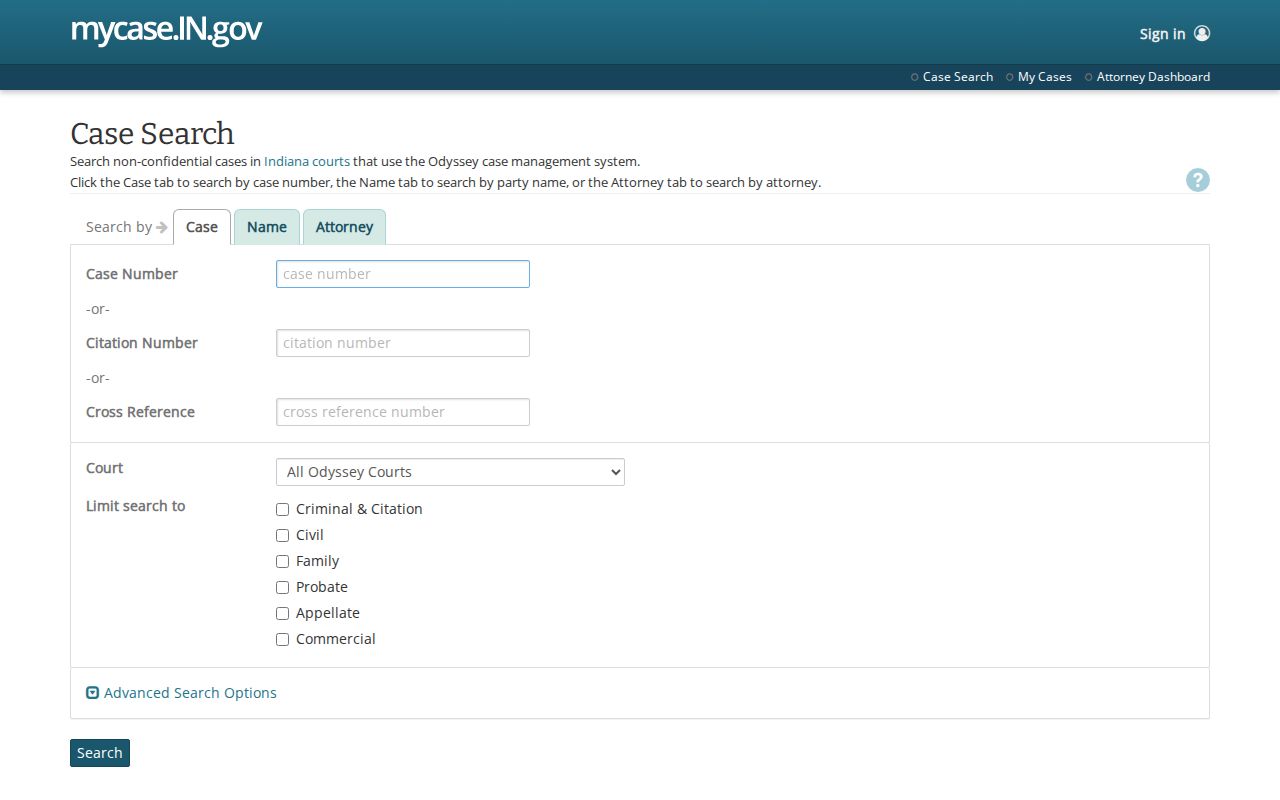
MyCase can close the loop on a case outcome. It cannot say whether someone sits in the county jail now.
Fields in an Arrest Report Trail
No single Monroe County log schema exists. Expect each source and custodian to present different fields. Indiana access law flags certain arrest and jail details, and the dashboard report describes some of the variables the county publishes.
| Field | How to interpret it |
|---|---|
| Name and identity clues | Confirm the right person without publishing unnecessary sensitive details. |
| Arrest date, time, and place | Describes the agency event, not necessarily jail intake. |
| Arresting agency or officer | Points to the custodian of the arrest or incident report. |
| Booking and release times | Describe MCCC custody events and should carry a source timestamp. |
| Charges as booked | Initial charges may differ from prosecutor-filed charges. |
| Bond or bail entry | Reflects a recorded condition at that stage, not the final case outcome. |
| Case number and disposition | Belong to the court trail and should preserve exact official wording. |
| Intake photograph | Must be requested separately when not published; release is not guaranteed. |
MCSO's request form treats a booking photo and an incident report as separate items. Bloomington's public-information process draws the same line. It separates daily-log arrest data from fuller investigatory reports. So "the arrest record" is too vague a request. Name the agency, the date, the person, and the record type.
Retention Beyond the Public Arrest Window
A vanished webpage does not end the official record. Indiana's County/Local Public Safety Agencies Retention Schedule sets its own clocks. Police reports and case files face destruction three years after final disposition. Misdemeanor records run seven years after charge. Alleged Level 6 felony records run seven years past the arrest year. Alleged murder and Level 1 to 5 felony records are permanent. Daily bulletins last one year. Expungement and restricted-access requests carry a ten-year schedule. That clock starts after the order is signed. None of this fixes how long a booking photo or MCCC field stays online. Litigation holds and public-record requests can also pause destruction. The IARA county/local program lists the schedules. Monroe County's retention officer can name the period for an exact record. The county archive and retention page names the official framework.
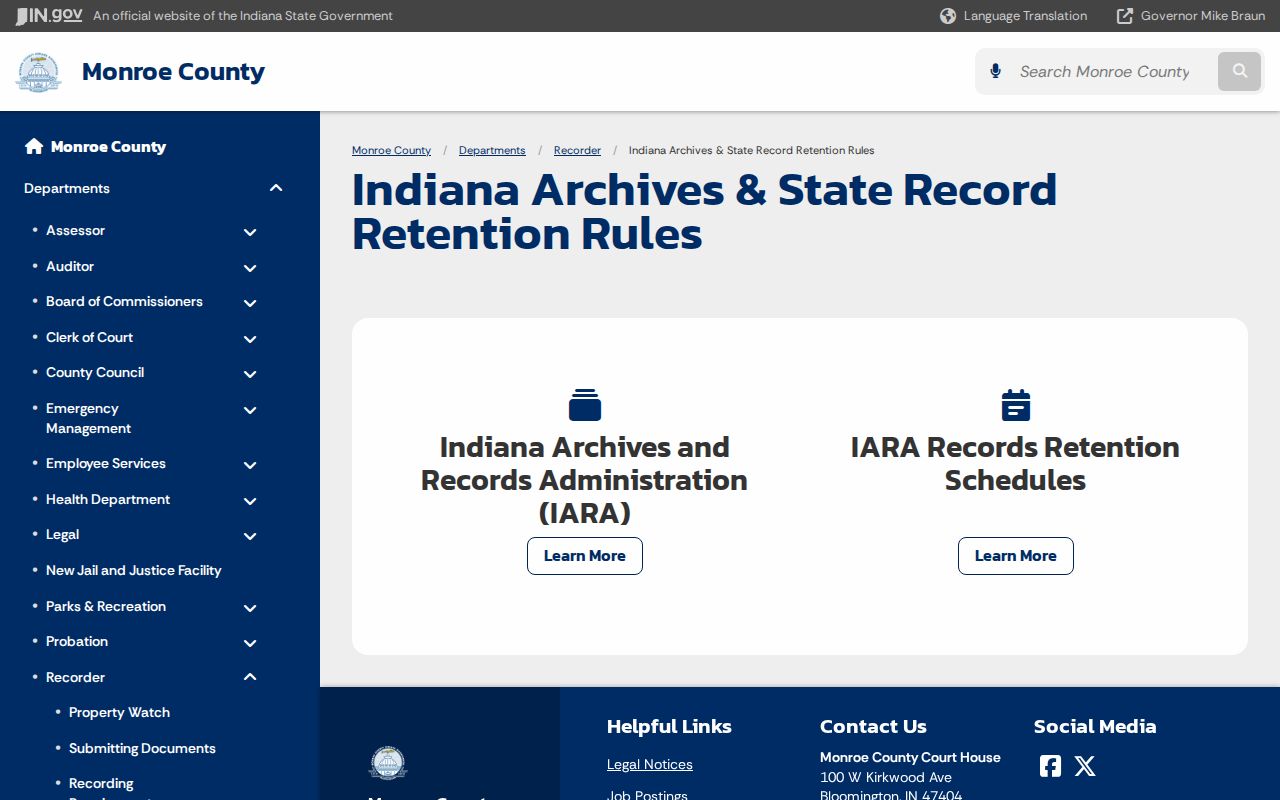
Pointing to the official schedule beats relying on a private site's copy, which may not survive.
Note: Expungement or restricted access may change public visibility without physically deleting every government or private historical copy.
News Blotters and Campus Logs
Local news adds narrative and follow-up. The Bloomingtonian crime section tracks police, arrest, court, and public-safety events. Older Herald-Times reporting sits behind access controls sometimes. Neither works as a full booking ledger. Publication may lag the arrest or the charge. The Herald-Times NewsBank archive offers search and browse for historical coverage. Treat archive hits as leads for context. They do not prove current custody. Campus incidents appear in the IU daily crime log for Bloomington. That log reports campus events and outcomes in its own frame. One IU case can still touch a police report, a county jail booking, MyCase, and VINE.
Unofficial Monroe Booking Pages
Start with the official record. Private pages still help. A spelling or an agency code can steer you toward county sources. A date or an old booking photo helps too. Their coverage windows and refresh habits differ, though. RecentlyBooked covers a rolling recent period for Monroe County and refreshes several times daily. MCJ Search updates about every six hours, drawing on a public jail census. Busted Newspaper spreads its Monroe entries across a paginated county page. Mugshots.com's Monroe section looks sparse and stale. None of that is an MCSO service promise. A private page cannot settle current custody or a final charge. A booking photo can linger there after release, dismissal, or restricted access. So match any lead against the dashboard, MCCC, the arresting agency, and MyCase. The RecentlyBooked Monroe County page shows one unofficial site's take on a current window.
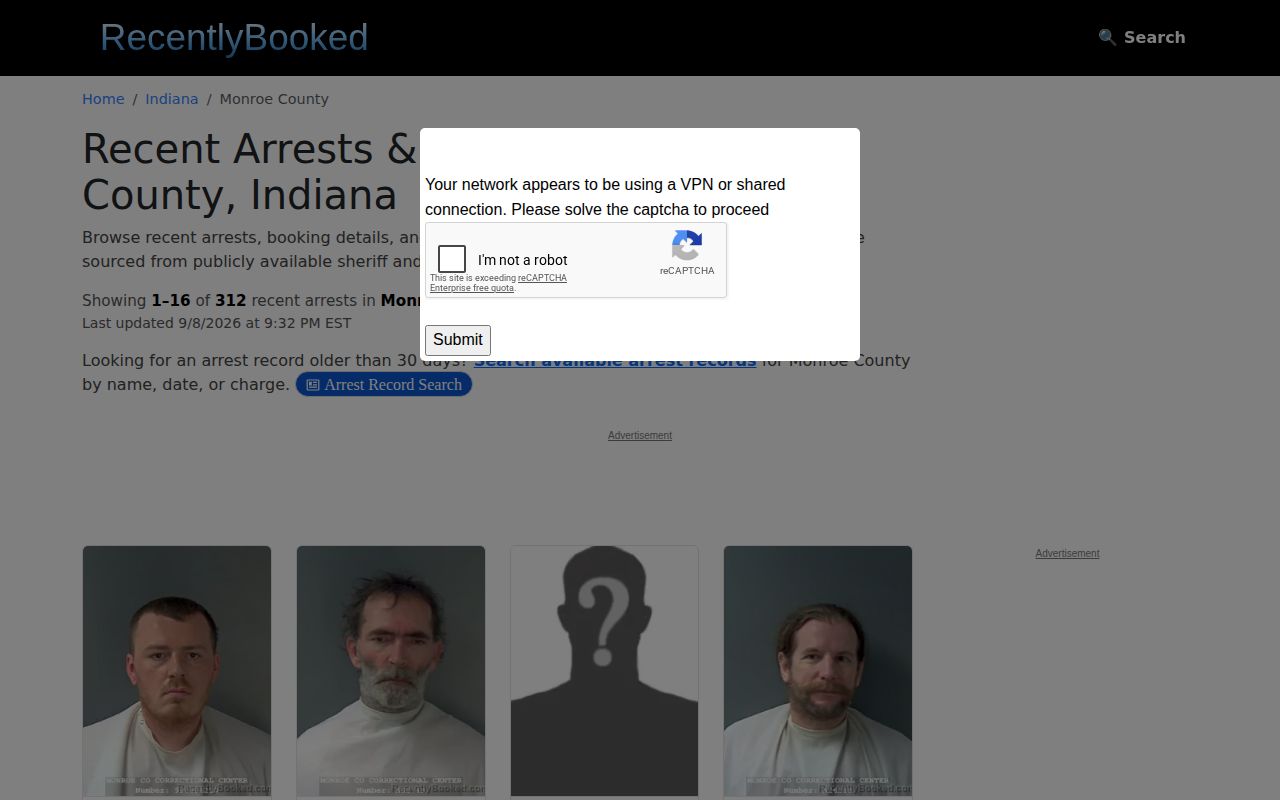
The update time shown on that page comes from RecentlyBooked itself. Verify the timing through county sources before relying on it.
Arrest Reports Are Not Verdicts
Exact court language matters most here. Case records give the charge, its current status, and any change on a known date, so quote the court rather than a headline.
For only the newest events, the Arrested Today page keeps the focus on same-day timing and custody verification. The county-wide Monroe County recent-arrests hub explains booking records and official access in broader context.
A warrant claim deserves the same care. The MCSO site publishes no public warrant roster. An unserved warrant can also stay confidential under Indiana access rules. A missing web result proves nothing either way, and an unofficial claim proves nothing on its own. Call the MCSO Warrant Division at 812-349-2778 with direct questions, or check court information that is open to the public. Never approach anyone over a web result.
Keep a short source log. Note the page address, access date, displayed update time, agency, and exact status wording. That makes later changes easier to sort out.
If sources disagree, request the underlying record. Hold both versions until the responsible office explains the gap. Skip the more dramatic account.